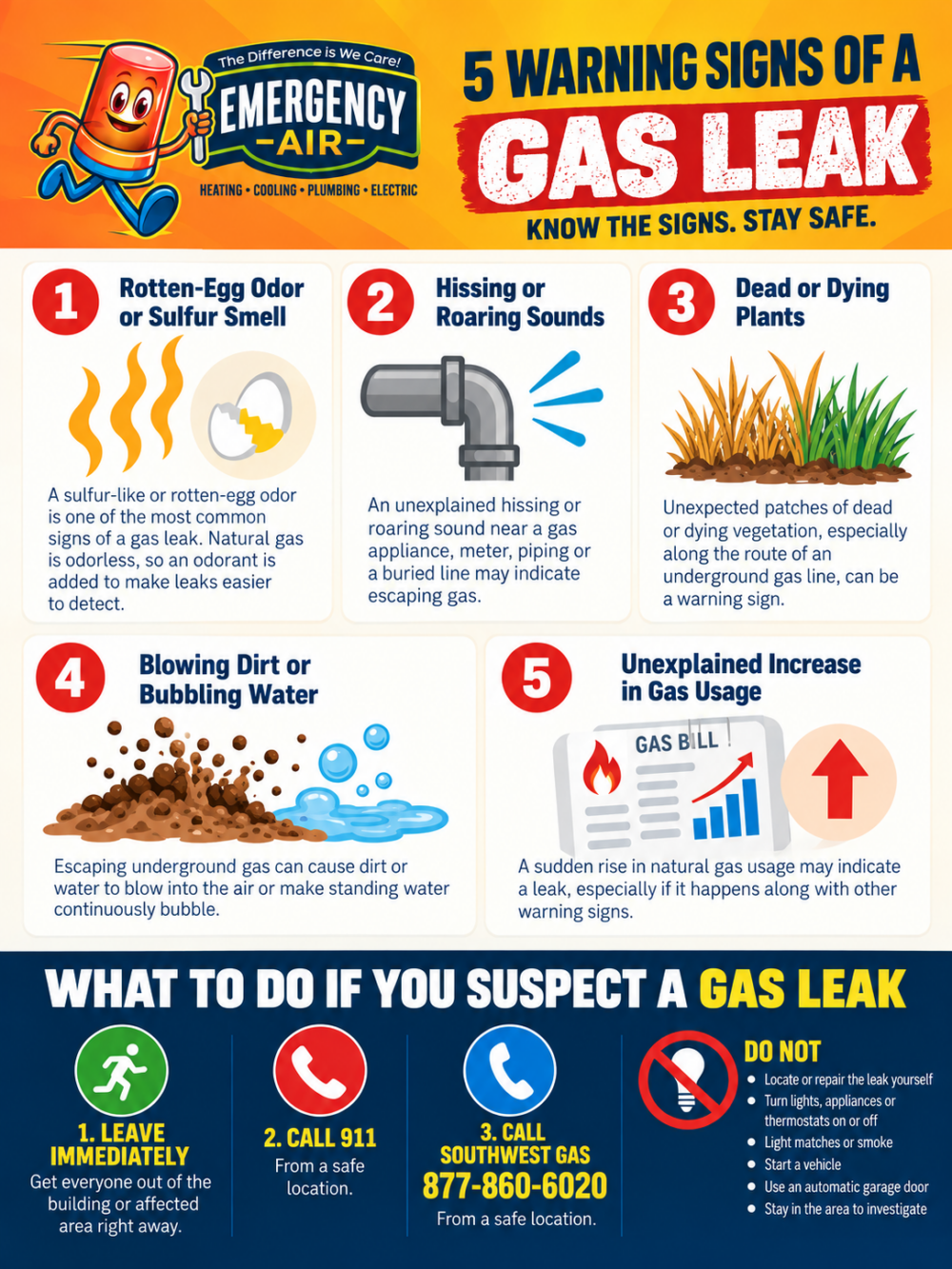
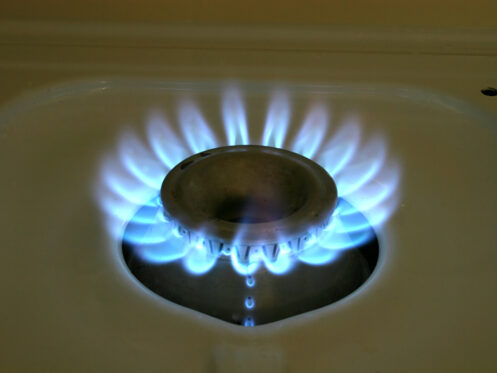
The most recognizable signs of a gas leak include a rotten-egg odor, hissing or roaring sounds, unusual changes in vegetation, blowing dirt or bubbling water near buried lines, and unexplained gas usage. If you suspect a natural gas leak, leave the area immediately and call 911 and your gas utility from a safe location. Do not try to locate or repair the leak yourself.
For many Phoenix-area homes, natural gas powers water heaters, furnaces, ranges and other appliances. Knowing the warning signs gives you a better chance of responding safely before attempting any troubleshooting.
What Should You Do If You Think You Have a Gas Leak?
Leave the building or affected area immediately. Once you are safely away, call 911 and Southwest Gas at 877-860-6020. Southwest Gas advises people to evacuate, avoid anything that could create a spark, and make the calls from a safe location.
Do not stop to investigate where the odor is coming from. Avoid turning lights, thermostats or appliances on or off, lighting matches, smoking, starting a vehicle or using an automatic garage door while you are in the affected area.
The priority is not diagnosing the problem. It is getting everyone away from the potential hazard.
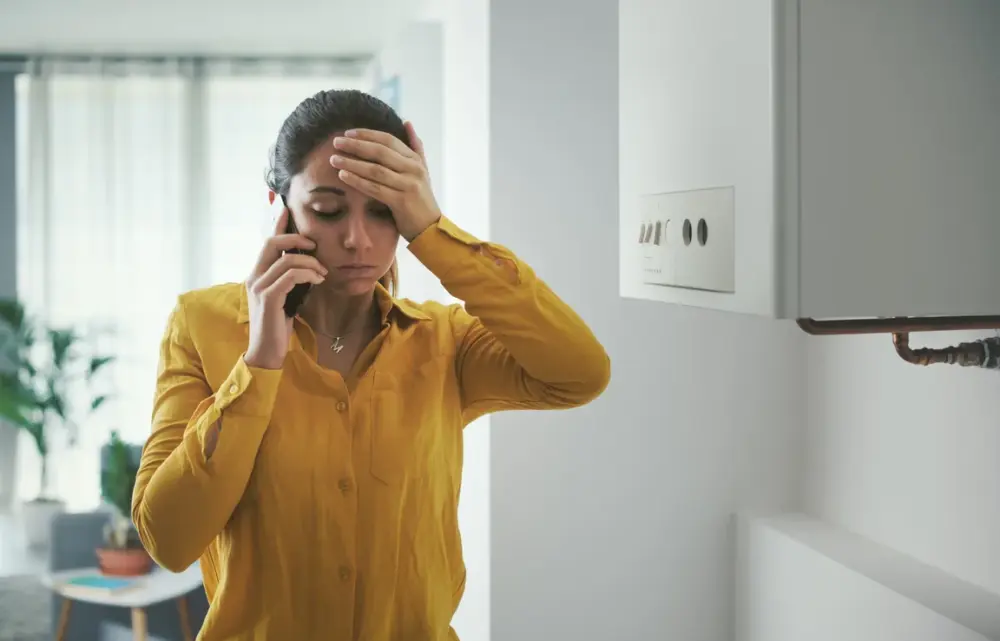
What Are the 5 Signs of a Gas Leak?
A gas leak does not always look dramatic. Some warning signs are noticeable only because something about the home suddenly seems different.
1. You Smell Rotten Eggs or Sulfur
A sulfur-like or rotten-egg odor is one of the best-known gas leak signs. Natural gas is naturally odorless, so utilities add an odorant to make leaks easier to detect.
Southwest Gas says even a faint or momentary sulfur-like odor should be taken seriously.
Do not remain inside trying to determine whether the smell is coming from the stove, furnace, water heater or another appliance. Leave first.
2. You Hear Hissing or Roaring
An unexplained hissing or roaring sound near a natural gas appliance, gas meter, exposed piping or an area where a line is buried may indicate escaping gas.
The sound can vary depending on the location and severity of the problem. You do not need to determine whether the sound is “loud enough” to qualify as a leak. If it appears to be coming from gas piping or equipment, treat it as a possible gas emergency.
3. Plants or Grass Suddenly Die for No Clear Reason
Unexpected patches of dead or dying vegetation can be another warning sign, particularly around the route of an underground gas line.
Plants can decline for many ordinary reasons in Arizona, including heat, irrigation problems and disease. A dead patch by itself does not prove there is a gas leak. However, unexplained vegetation damage combined with a gas odor, unusual sound or another warning sign should not be ignored.
4. You See Blowing Dirt or Bubbling Water
Escaping underground gas can disturb soil or water. Southwest Gas lists dirt or water blowing into the air and standing water that continuously bubbles among the visible signs of a possible natural gas leak.[1]
This can be particularly important outside the house, where you may not notice the familiar odor as easily.
Do not approach the area to inspect it more closely. Move away and report the suspected leak.
5. Your Gas Usage Rises Without an Obvious Explanation
An unexplained increase in natural gas use can sometimes accompany a leak, although a higher bill alone does not prove that one exists.
Seasonal heating use, rate changes, longer showers, additional occupants or an inefficient appliance can all increase consumption. But if usage suddenly changes and you also notice odor, sound, appliance problems or other unusual conditions, professional evaluation is appropriate.
Emergency Air lists unexpected gas costs among the conditions that can point to gas-line trouble, but immediate leak response should always be based on safety first rather than waiting for a bill.
Can You Check for a Gas Leak Yourself?
You should not attempt to pinpoint an active gas leak yourself when you smell gas or notice another strong warning sign. Leave the area and let emergency responders and the gas utility address the immediate hazard.
After the property has been made safe, a qualified professional may need to evaluate customer-owned gas piping, appliance connections or other components and determine what needs repair.
Emergency Air provides gas line services in Chandler and serves communities throughout the Phoenix metro area. The goal of professional gas-line work is to identify the cause, explain the available options and complete the appropriate repair without asking a homeowner to experiment with a potentially dangerous system.
What Can Cause a Residential Gas Leak?
Gas-line problems can result from several conditions, including aging or damaged piping, corrosion, loose connections, appliance-related problems and accidental damage.
Excavation is another important risk. Southwest Gas reminds Arizona homeowners to contact 811 before digging so underground utility-owned lines can be marked. Even seemingly small projects such as planting can reach buried utilities.
Inside the home, gas appliances and their connections should be treated as professional-service items when there is evidence of leakage or damage. This is not an area for trial-and-error repairs.
Emergency Air’s Chandler plumbing services include gas-line work along with water heaters, leak detection and other plumbing services.
How Can Phoenix-Area Homeowners Reduce Gas-Line Problems?
Prevention starts with paying attention to changes and treating gas piping as an important home system rather than something that only matters when a leak occurs.
Know where gas appliances are located. Keep areas around accessible equipment clear enough that obvious corrosion or damage can be noticed. Have appliance or gas-line concerns evaluated by a qualified professional instead of waiting for a complete failure.
Before digging outdoors, use Arizona’s 811 process. If remodeling work will move or add a gas appliance, have the new piping and connections handled by professionals qualified for that work.
Emergency Air serves homeowners across the Phoenix metro service area, so gas-line recommendations can also account for the layout and equipment actually used in a Valley home.
Frequently Asked Questions About Gas Leaks
What does a natural gas leak smell like?
A natural gas leak is commonly associated with a sulfur or rotten-egg smell because an odorant is added to otherwise odorless natural gas. Even a faint or short-lived odor should be taken seriously.
Who should I call if I smell gas in Arizona?
Leave the area first, then call 911 and Southwest Gas at 877-860-6020 from a safe location. Southwest Gas gives this instruction whether or not the caller is currently a Southwest Gas customer.
Should I turn off lights if I smell gas?
No. Do not turn electrical switches, thermostats or appliance controls on or off when you suspect a gas leak because operating electrical equipment can create an ignition source. Leave the building instead.
Does a high gas bill always mean there is a leak?
No. Higher consumption can have several causes, including weather, household usage and equipment efficiency. It becomes more concerning when the increase accompanies other gas-leak warning signs.
Can a plumber repair a gas line after a leak?
Qualified professionals can repair customer-owned gas piping when the work falls within their licensing and service scope. The immediate emergency should first be reported to 911 and the gas utility and the property made safe.
If a gas-line problem is identified after the immediate danger has been addressed, contact Emergency Air for professional gas-line service in the Phoenix metro area. The team can evaluate the piping, explain what it finds and discuss the appropriate repair options so you can make an informed decision about your home.